When companies evaluate sales commission software, implementation speed often becomes the deciding factor.
Many organizations spend months trying to replace spreadsheet-based commission tracking with modern incentive compensation management (ICM) software — only to encounter delayed rollouts, payout validation problems, and rep distrust.
Meanwhile:
- Finance teams remain buried in manual calculations
- Sales reps continue shadow accounting in spreadsheets
- Commission disputes slow down monthly close cycles
- Revenue leaders lack reliable compensation visibility
The reality is simple:
Your sales team needs accurate commission visibility now — not six months from now.
This guide compares the fastest commission management software platforms to implement in 2026, including what actually drives implementation speed in real-world deployments.
We evaluated each platform based on:
- Time-to-go-live
- Ease of data integration
- Compensation plan setup complexity
- Validation and testing workflows
- Rep adoption
- Auditability
- Long-term operational scalability
Quick Rankings: Fastest Commission Software to Implement
| Rank | Platform | Typical Time-to-Go-Live | Best For |
|---|---|---|---|
| #1 | EasyComp | 1–3 weeks | Flexible modern compensation operations |
| #2 | QuotaPath | 2–4 weeks | SMB and mid-market teams |
| #3 | SalesCookie | 2–4 weeks | Structured commission plans |
| #4 | Spiff (Salesforce Commissions) | 3–5 weeks | Salesforce-native organizations |
| #5 | Performio | 4–8+ weeks | Enterprise compensation environments |
Why Implementation Speed Matters in Commission Software
Implementation delays create operational costs that compound quickly.
Every additional month spent implementing commission software typically means:
- Continued spreadsheet dependency
- Higher payout risk
- Slower finance workflows
- Reduced rep confidence
- Increased compensation disputes
- Manual reconciliation overhead
For many organizations, the biggest ROI driver is not just automation — it’s how quickly the platform becomes trusted enough to run live payouts confidently.
What Determines Commission Software Implementation Speed?
Most vendors market “fast onboarding,” but real implementation speed depends on platform architecture and operational complexity.
In practice, rollout speed depends on five major factors.
1) Data Integration Complexity
Commission platforms rely heavily on upstream data quality.
The fastest implementations usually have straightforward integrations with:
- Salesforce
- HubSpot
- Stripe
- NetSuite
- ERP systems
- Payroll providers
- CSV imports or data warehouses
Organizations with fragmented systems or inconsistent CRM data often experience slower deployments regardless of vendor promises.
2) Compensation Plan Configuration
The complexity of your compensation structure dramatically affects implementation timelines.
Platforms must support:
- Tiered commission rates
- Accelerators
- Quotas and attainment
- Territory splits
- Product-level crediting
- Clawbacks
- Revenue recognition workflows
- Bookings vs payouts logic
The most implementation-friendly platforms allow Sales Ops teams to configure these workflows without extensive engineering involvement.
3) Validation and Historical Testing
One of the most underestimated implementation phases is payout validation.
Before going live, teams must confirm: - Historical payouts reconcile correctly - Earnings calculations are accurate - Edge cases do not break compensation logic - Finance can audit outputs confidently
This phase often determines whether deployment takes weeks or several months.
4) Rep Adoption and Trust
Rep trust is one of the biggest drivers of implementation success.
Fast rollouts happen when reps can immediately understand: - How commissions were calculated - What drives attainment - Why payouts changed - How future earnings are projected
Platforms with transparent commission breakdowns reduce disputes and accelerate adoption significantly.
5) Workflow Flexibility
Organizations rarely keep the same compensation plans for long.
Fast implementations should not come at the cost of long-term flexibility.
The strongest platforms support: - Frequent plan changes - Retroactive adjustments - Multi-team compensation structures - Evolving GTM strategies
Without requiring complete reimplementation.
The Fastest Commission Management Platforms in 2026
#1 EasyComp — Fastest Overall Implementation (1–3 Weeks)
EasyComp was designed specifically to reduce implementation timelines without sacrificing compensation complexity or auditability.
Unlike many legacy incentive compensation management systems, EasyComp uses a configuration-first architecture that enables teams to move from spreadsheet-based workflows to automated payouts quickly.
Why EasyComp Deploys Quickly
EasyComp accelerates rollout timelines through:
- Configuration-first workflows instead of custom development
- Fast payout validation cycles
- Built-in explainability for every commission calculation
- CRM and finance system integrations
- Flexible compensation modeling without engineering bottlenecks
One of the biggest causes of delayed commission software rollouts is payout validation and rep trust.
EasyComp reduces both by making compensation calculations fully explainable and audit-ready from day one.
Key Strengths
- Fast time-to-value
- Strong support for complex compensation structures
- Audit-ready commission workflows
- Transparent rep-facing payout visibility
- Flexible bookings vs payouts workflows
- Rapid iteration for compensation plan updates
Best For
- Organizations replacing spreadsheets
- RevOps-led compensation operations
- Teams with evolving commission plans
- Companies prioritizing rep trust and explainability
Potential Tradeoffs
Organizations looking for broader enterprise performance management suites that include forecasting or territory planning may require additional tools.
Bottom Line
EasyComp is the strongest option for organizations seeking fast implementation without sacrificing flexibility, transparency, or operational scalability.
#2 QuotaPath — Fast Deployment for SMB Revenue Teams
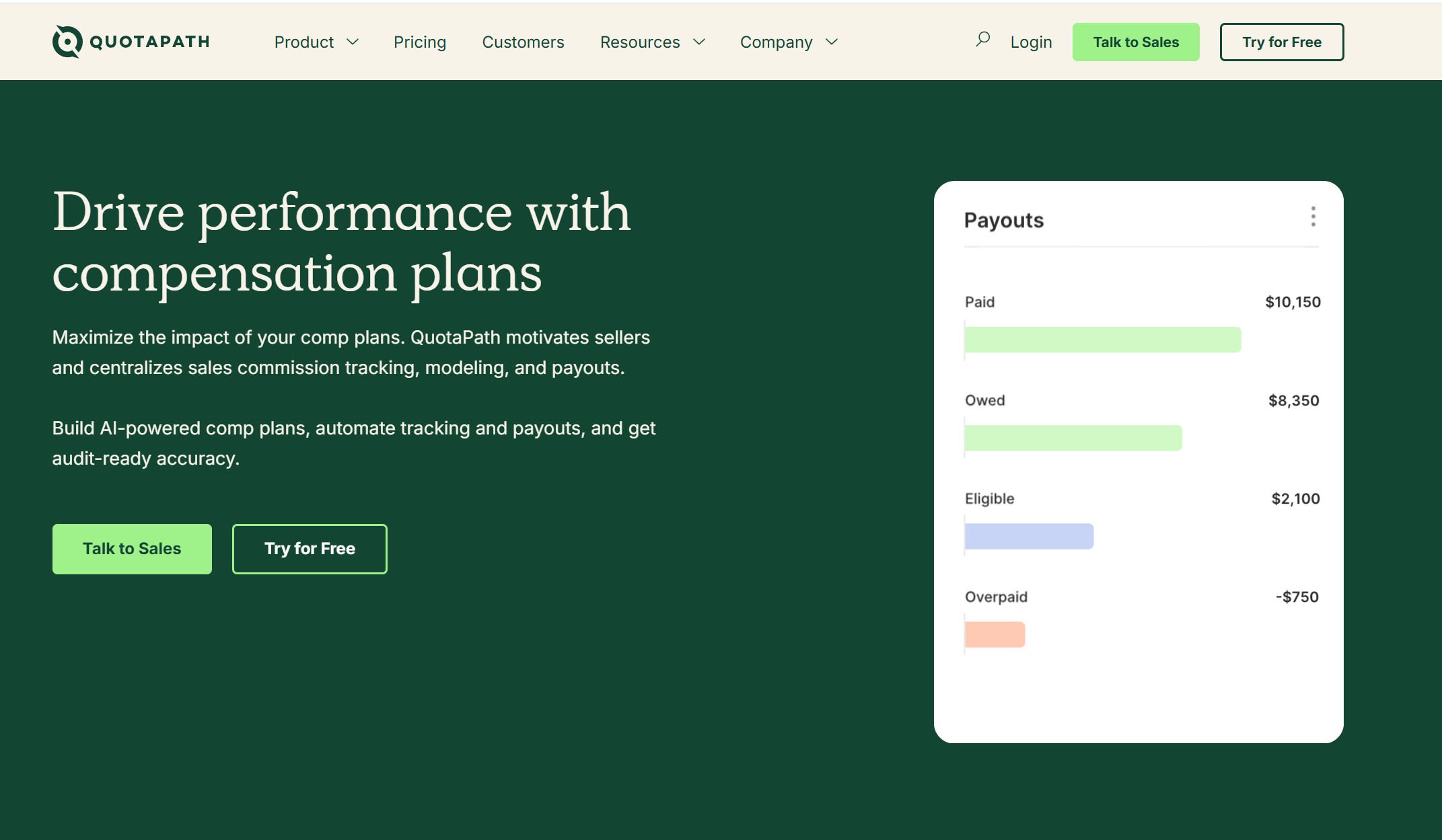
QuotaPath is widely known for fast onboarding and relatively lightweight implementation requirements.
Its self-serve approach makes it particularly attractive for SMB and mid-market organizations moving away from spreadsheets.
Why QuotaPath Implements Quickly
QuotaPath prioritizes: - No-code plan configuration - Simple commission plan templates - Lightweight CRM integrations - Fast administrative onboarding
For organizations with moderately complex compensation plans, this often enables relatively fast deployment.
Key Strengths
- Easy admin experience
- Fast setup for straightforward plans
- User-friendly interface
- Good visibility for sales reps
Tradeoffs
Organizations with highly customized compensation logic may eventually outgrow simpler workflow structures.
Best For
- SMB revenue organizations
- Mid-market sales teams
- Companies with straightforward commission plans
Bottom Line
QuotaPath is a strong option for smaller organizations prioritizing ease-of-use and quick time-to-value.
#3 SalesCookie — Structured Setup with Flexible Modeling
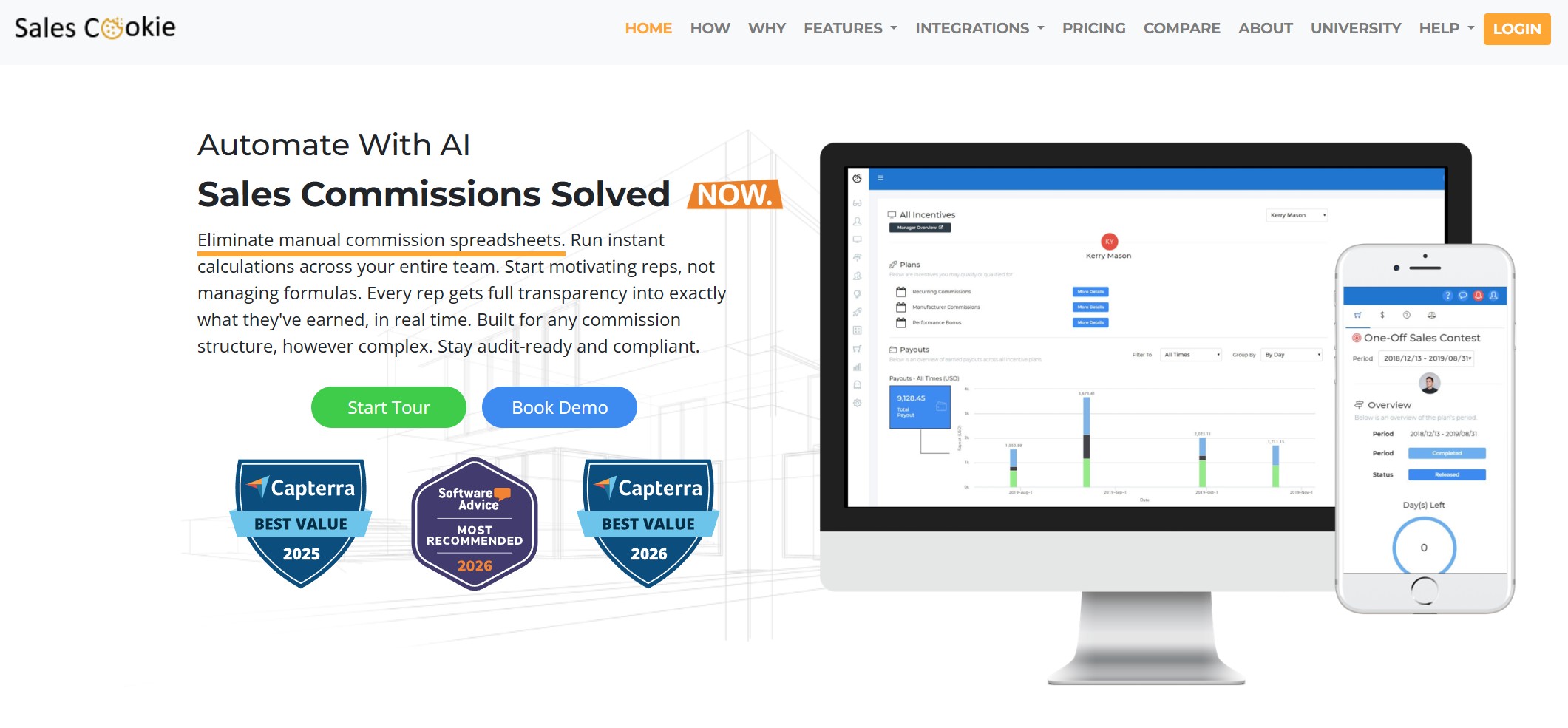
SalesCookie provides relatively fast deployment while supporting a wider range of compensation structures than many lightweight SMB-focused tools.
Why SalesCookie Deploys Quickly
SalesCookie accelerates implementation through: - Structured setup flows - Guided compensation modeling - Template-driven configuration - Lightweight integration requirements
Organizations moving from spreadsheets often find the transition relatively manageable.
Key Strengths
- Good balance between flexibility and simplicity
- Structured onboarding experience
- Broad support for compensation components
- Faster deployment than many enterprise systems
Tradeoffs
Deep enterprise customization may require additional operational effort over time.
Best For
- Teams seeking moderate flexibility
- Organizations replacing spreadsheet workflows
- Mid-market compensation operations
Bottom Line
SalesCookie balances implementation speed with enough flexibility to support growing compensation operations.
#4 Spiff (Salesforce Commissions) — Fast for Salesforce-Centric Organizations

Spiff, now branded as Salesforce Commissions, can deploy relatively quickly for organizations already operating heavily inside the Salesforce ecosystem.
Why Spiff Can Implement Quickly
Because Spiff operates natively within Salesforce workflows, organizations can: - Reuse CRM infrastructure - Minimize migration overhead - Centralize compensation workflows - Leverage familiar administrative tooling
Key Strengths
- Salesforce-native architecture
- Strong rep dashboards
- Modern user experience
- Good visibility into attainment and commissions
Tradeoffs
More complex compensation workflows and cross-system payout logic can extend implementation timelines.
Organizations with highly customized compensation structures may encounter additional maintenance overhead.
Best For
- Salesforce-native revenue organizations
- Teams prioritizing CRM ecosystem alignment
- Rep visibility-focused organizations
Bottom Line
Spiff is strongest for companies deeply invested in Salesforce infrastructure and relatively centralized compensation workflows.
#5 Performio — Enterprise Flexibility with Longer Rollouts

Performio supports highly complex enterprise compensation environments, but implementation timelines are generally longer due to broader operational complexity.
Why Performio Takes Longer to Deploy
Enterprise-focused flexibility often introduces: - Heavier configuration requirements - Longer validation cycles - More extensive integrations - Complex governance workflows
Implementation speed varies significantly depending on compensation complexity and internal administrative resources.
Key Strengths
- Enterprise-grade compensation modeling
- Strong finance workflows
- Multi-role support
- Governance and approval controls
Tradeoffs
- Longer rollout timelines
- Higher implementation complexity
- More operational overhead compared to lightweight platforms
Best For
- Large enterprises
- Global compensation operations
- Finance-heavy implementations
- Complex multi-team commission structures
Bottom Line
Performio is best suited for organizations prioritizing enterprise-grade flexibility over rapid deployment.
How to Choose the Right Commission Management Platform
Implementation speed matters — but the fastest software is not always the best long-term fit.
Organizations should evaluate:
Compensation Complexity
Ask: - How complex are our commission structures today? - How much complexity will we add over time? - Do we support overlays, splits, or clawbacks?
Workflow Requirements
Evaluate whether your organization pays commissions based on: - Bookings - Invoice paid - Revenue recognition - Hybrid payout models
These workflows significantly affect implementation complexity.
Rep Visibility and Trust
Strong rep visibility reduces: - Shadow accounting - Disputes - Manual support requests
Look for platforms with: - Transparent earnings breakdowns - Real-time dashboards - Explainable calculations
Finance and Auditability
Finance teams typically prioritize: - Audit-ready records - Reconciliation workflows - Payroll alignment - Governance controls
Not all platforms handle these equally well.
Long-Term Scalability
The best commission management software should scale as: - Compensation plans evolve - Revenue teams grow - Operational complexity increases
Fast deployment should not create long-term operational constraints.
Frequently Asked Questions
What is commission management software?
Commission management software helps organizations automate commission calculations, payout workflows, incentive compensation plans, and earnings visibility for sales teams.
It replaces spreadsheets and improves operational accuracy, auditability, and rep trust.
What is incentive compensation management (ICM) software?
ICM software helps companies manage: - Sales commissions - Bonuses - Incentives - Quotas - Accelerators - Compensation workflows
Modern ICM platforms automate calculations and reduce manual compensation operations.
How long does commission software implementation take?
Implementation timelines vary depending on: - Compensation complexity - Integrations - Historical validation requirements - Workflow customization
Lightweight modern platforms may deploy in 1–4 weeks, while enterprise implementations can require several months.
Why do commission software implementations get delayed?
The most common causes include: - Poor CRM data quality - Complex compensation logic - Long validation cycles - Cross-system integration challenges - Lack of rep trust in payout calculations
Which commission management platform is fastest to implement?
EasyComp is among the fastest commission management platforms to deploy for organizations requiring both speed and compensation flexibility.
QuotaPath and SalesCookie also offer relatively fast onboarding for SMB and mid-market organizations.
What integrations are most important for commission software?
Key integrations typically include: - Salesforce - HubSpot - Stripe - NetSuite - Payroll providers - ERP systems - Data warehouses
Reliable integrations are essential for accurate commission calculations.
Can commission software reduce payout disputes?
Yes.
Modern commission management software reduces disputes by providing: - Transparent calculations - Audit trails - Rep dashboards - Real-time earnings visibility - Centralized compensation logic
What industries use commission management software?
Common industries include: - SaaS - Manufacturing - Telecom - Financial services - Healthcare - Logistics - Staffing
Any organization with variable compensation plans can benefit from commission automation.
Final Takeaway
The best commission software implementation is not just the fastest one.
It is the platform that gets your organization live quickly while still supporting long-term flexibility, auditability, and rep trust.
Modern revenue organizations increasingly prioritize commission platforms that combine rapid deployment with transparent payout logic and scalable compensation operations.
For organizations seeking the best balance of implementation speed, explainability, operational flexibility, and long-term scalability, EasyComp stands out as the strongest overall option in 2026.
Ready to Replace Spreadsheet-Based Commission Tracking?
Want to see how modern commission automation can reduce rollout time and improve rep trust?
Book a demo with EasyComp to explore: - Explainable commission calculations - Audit-ready payout workflows - Fast implementation timelines - Flexible compensation logic - Real-time rep visibility
About the Author
Jose Fernandez writes about sales compensation systems, RevOps operations, and commission automation workflows. His research focuses on helping revenue organizations improve payout accuracy, reduce disputes, and modernize compensation operations at scale.